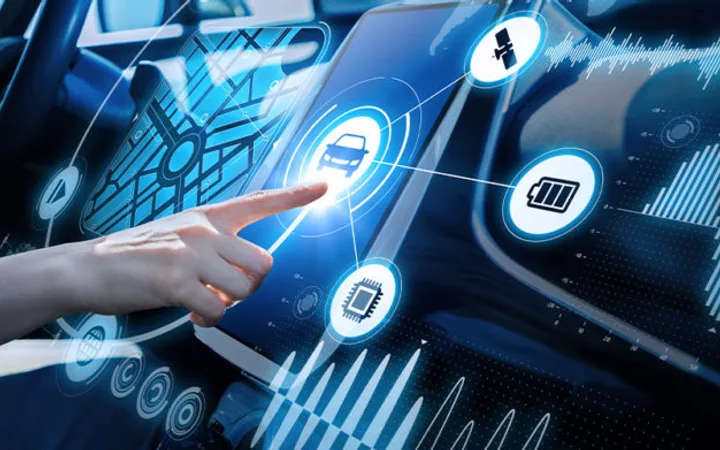
One key consideration for modern automakers is how to appeal to newer generations of drivers and passengers, who expect their vehicles to be as digitally capable as their phones.
#
With infotainment touchscreens, connectivity and voice assistance fast becoming industry-standard, automakers should be keen to protect their innovative approaches to gain competitive advantage. Here’s a quick guide to protecting such human-machine interface (HMI) technology, as we explore which elements could be the focus of patent applications.
Perceived difficulties with protecting human-machine interfaces#
A major difficulty in protecting HMIs with patents is how commonly we see and engage with them in our modern world. Most people would consider an HMI as simply the face of a system (without its own technical merit) and therefore devalue its utility. Human psychology dictates that this will play into any assessment of patentability, as small modifications (even if they have a big effect) can be dismissed as obvious. This is no different with automotive HMIs.
Since the features of HMIs are often understood in terms of the information they present, rather than the functionality offered, many automakers are reluctant to apply for patent protection. At first glance this seems sensible — particularly in Europe, as the European Patent Convention explicitly prevents patent protection for ‘presentations of information’. Yet automotive HMIs are different due to the nature of their use in an environment where safety is paramount. One second of unnecessary distraction on the road can lead to catastrophe, so automotive HMIs need to be designed with both simplicity and safety in mind.
The difference with automotive HMIs#
Automakers often develop innovative HMI solutions that provide access to a significant number of functions in a simple and safe way. This usually involves processing several sources of data to determine the situation either inside or outside of the vehicle to ensure that information is positioned exactly where it needs to be. This helps drivers and passengers to interact with that information without jeopardising their safety.
For example, the Mercedes-Benz Hyperscreen includes a passenger display that offers many entertainment choices. The system monitors the driver to determine where they are looking and — if the driver is looking at the passenger display — it shuts off to minimise driver distraction.
Another example is the natural language interfaces provided by both Mercedes and Honda, which offer more intuitive voice commands to enable driver-vehicle interaction without the need for the driver to take their hand from the wheel.
When can automotive HMIs secure patent protection?#
User interfaces can be protected with patents when they provide a technical effect. In the context of human machine interfaces, this is generally where the innovation centres on the mechanism for user input — particularly if this doesn’t depend on subjective user preferences or abilities.
The application of even known user interface approaches in the automotive space may still be patentable, especially if they overcome important obstacles — for example, if the approach was previously seen as unsuitable because it caused the driver to take their attention away from the road for too long.
The important thing is to be able to draw out the technical challenges that have been overcome by the automotive human machine interface and the non-subjective benefits it provides to the user.
Although registered designs can be used to protect user interfaces, they are generally only effective for the aesthetic features of the user interface — not the underlying functionality.
If you are innovating in this space, get in touchfor a free initial chat about your technology and how we can help.


