Battery electric vs hydrogen – which is the future for electric vehicles?

Alan Jones
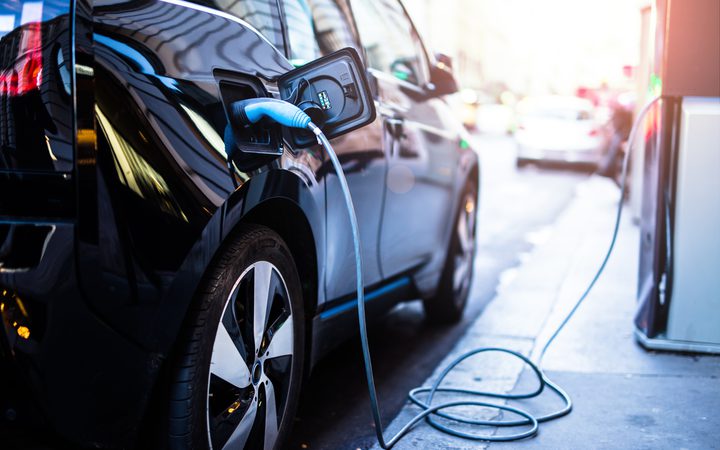
With transportation responsible for a significant percentage of global greenhouse gases, two technologies have emerged as viable solutions for decarbonisation — battery electric vehicles and hydrogen fuel cell vehicles. Here, we explore the science and patent landscape to reveal which is likely to become the most viable alternative to petrol- and diesel-powered vehicles.
Battery EVs — a quick introduction
A battery electric vehicle uses an onboard battery pack to power the vehicle’s motor, which includes varying configurations of battery cells. While there are many variations of battery cell architecture based on different combinations and materials of the anode, cathode and electrolyte, the general principle is the same — to provide a device that converts stored chemical energy to electrical energy. This provides an electric current, used to drive the electric motors that turn the wheels, propellers and other mechanisms.
Battery EVs — the drawbacks
Despite the environmental and efficiency advantages of battery electric vehicles, lithium-ion batteries — considered the best currently available — only have around 1% of the energy density of petrol or diesel. For this reason, smaller and lighter vehicles appear to be the best candidates for battery electric powertrains. As vehicles increase in size, the size and weight of the battery pack required to power the vehicle, as well as the available range, begins to make battery power a less attractive option.
Hydrogen fuel cell EVs — the advantages
Hydrogen fuel cells have a far greater energy storage density than lithium-ion batteries, offering a significant range advantage for electric vehicles while also being lighter and occupying less space. Hydrogen-powered vehicles can also be refuelled in just a few minutes, while those that are battery-powered require a wait while the battery charges.
Hydrogen fuel cell EVs — a quick introduction
As with battery electric vehicles, hydrogen fuel cell electric vehicles use electricity to power an electric motor. This is generated by a fuel cell powered by hydrogen, rather than drawing electricity directly from a battery. The fuel cell generates electricity through an electrochemical reaction in which hydrogen and oxygen are combined to generate electricity, heat, and water. The fuel cell is composed of an anode, cathode, and an electrolyte membrane. In general terms, hydrogen enters the fuel cell through the anode, where it’s spilt into electrons and protons. Hydrogen ions pass through the electrolyte which forces the electrons through a circuit, generating an electric current and excess heat. Oxygen entering at the cathode combines with electrons from the electrical circuit and the hydrogen ions that have passed through the electrolyte from the anode, creating a harmless emission — water.
Hydrogen fuel cell EVs — the drawbacks
The technical challenges facing hydrogen fuel cell electric vehicles are the availability and clean production of hydrogen and the utilisation of hydrogen as a power source.
The production of hydrogen requires significant amounts of energy, so the way it’s produced is critical to its environmental impact. Despite hydrogen being a colourless gas, it’s referred to by a range of colours that indicate the environmental impact of its production, for example:
- Grey hydrogen is produced from fossil fuels in a process that releases CO2 into the atmosphere. This is currently the cheapest and most common form of hydrogen.
- Blue hydrogen is also produced using fossil fuels, but the resulting CO2 is captured to limit greenhouse gas emissions. The carbon capture process means that blue hydrogen is more expensive than its grey counterpart. The UK government’s recently announced investment in the hydrogen economy leans heavily on blue hydrogen production. However, there are doubts over just how clean the process truly is, with some figures suggesting that 5-15% of the CO2 produced is emitted, which could lead to millions of tonnes of CO2 being released into the atmosphere annually.
- Green hydrogen is produced using electricity from renewable energy sources such as wind and solar, making it the cleanest form of hydrogen. One of the most promising options for green hydrogen uses electricity from renewable resources to power the electrolysis of water. Chemistry plays a critical role in this process, which splits water into hydrogen and oxygen. Electrolysers are differentiated by the electrolyte material and operating temperature. Some examples include alkaline electrolysers, proton exchange membrane electrolysers and ion exchange membrane electrolysers. The cost of green hydrogen is ultimately much greater than blue or grey due to the cost of the electrolysers and the electricity required to operate them.
The future of passenger transport and the energy loss conundrum
Because of this, the current consensus is that the future of passenger and short-range vehicles (such as inner-city delivery vehicles) lies in battery electric powertrains. While hydrogen fuel cell electric vehicles are also considered to have applications in this area, innovation is largely focused on applying hydrogen fuel cells for larger scale, longer distance transport, as revealed by a review of the current patent activity in this field.
If one of your main goals is to save the planet, battery electric vehicles are considerably more energy efficient than hydrogen fuel cell vehicles when you consider the series of steps between power generation and propulsion. With a battery electric vehicle, once the electricity is generated (hopefully from a renewable source) the process of supplying this to your vehicle charging location means that around 5% of it is lost. The process of charging and discharging the battery loses another 10%. Finally, the motor wastes another 5% when the vehicle is being driven. That makes for a total loss of 20%.
With a hydrogen fuel cell, you must first convert the electricity to hydrogen via electrolysis, which is only 75% efficient. The gas then must be compressed, chilled and transported, losing another 10%. The fuel cell process of converting hydrogen back to electricity is only 60% efficient, after which you have the same 5% loss from driving the vehicle motor as for a battery electric vehicle. The grand total is a 62% loss — more than three times as much.
To put it another way, for every kW of electricity supply, you get 800W of energy for a battery electric vehicle but only 380W for a hydrogen fuel cell vehicle — less than half as much. That’s a huge inefficiency if you’re hoping for a greener future and this doesn’t even account for the fact that 95% of hydrogen is currently generated from fossil fuel sources.
The future of hydrogen fuel cell technology
Nevertheless, hydrogen still has niches where its main strengths — lightness and quick refuelling — provide a clear advantage. While it’s possible to fit personal driving lifestyles around strategic battery charging stops, this isn’t ideal for commercial or long-distance public transport vehicles like trains or coaches, which rely on fast refuelling to reduce wait times across long distances.
A review of current innovation around hydrogen fuel cell vehicles reveals the application of hydrogen fuel cell technology in areas including:
Marine technology
Daewoo is currently developing hydrogen propulsion systems for marine applications. Korean patent KR20190054206A describes a liquid hydrogen powered fuel cell-based propulsion system for submarines. Korean patent KR20190073050 describes a hybrid hydrogen fuel cell-based power system for a ship using liquified hydrogen gas as the fuel to generate electricity to power the rotation of the propeller shaft.
Furthermore, research by Zhejiang Ocean University described in Chinese patent CN110758708 includes a marine fuel cell hybrid propulsion system that integrates hydrogen fuel cells and a battery pack. Under normal operation, the hydrogen fuel cell provides power to the propulsion system, but under conditions that demand higher power output the fuel cell and battery pack jointly power the ship.
Aviation
Hydrogen fuel cells are also being explored as a power source for aviation. Chinese patents CN211543883 and CN 211253048 describe an unmanned aerial vehicle powered by a hydrogen fuel cell.
Meanwhile, Airbus is pursuing hydrogen-fuelled airliners and has indicated that it will decide by 2025 whether this technology is commercially viable. The company has projected that its first hydrogen airliners may enter service in 2035.
In 2008, Boeing built a hydrogen powered aircraft and four years later unveiled the Phantom Eye — a liquid-hydrogen-powered unmanned aerial vehicle capable of flying missions lasting up to four days at an altitude of 20,000 metres. Boeing has filed many patent applications relating to hydrogen-powered flight including WO2005/084156, which describes a hydrogen fuel cell aircraft that compresses ambient air for an oxidiser, and US7,871,042, which describes solutions for storing liquid hydrogen fuel with a reduced tank weight.
The future is… hybrid?
While hydrogen fuel cells offer a clean, energy-dense power source for the transport sector, the technology is currently expensive with limited supporting infrastructure. Despite this, hydrogen power appears to be developing as the forerunner for long-range transport and with the benefit of a more lightweight propulsion system than the battery cell alternative. Recent commercial investment in hydrogen powered vehicles has seen the development of hydrogen-powered technologies for cargo ships, trains and ambulances. Once the technology is sufficiently developed, hydrogen has the potential to increase range and address the issue of charging time, particularly for larger battery packs.
However, at present, lithium-ion battery technology remains the most commercially advanced and practical solution for powering passenger and other lightweight electric vehicles. With 1,800 new ultra-rapid charging points set to be installed across UK motorway service stations as part of the Government’s £40bn energy network investment programme, and with more funds on the way to help prepare the country for greener transport methods, the take-up of battery electric vehicles only looks set to proliferate over the next few years, as consumers’ range anxiety is addressed and EV ownership becomes more normalised.
If you’re innovating in battery electric or hydrogen fuel cell electric vehicles, get in touch with us today — contact us for a free initial chat about how we can help to protect your technology.
Meet the author

About Alan Jones
Related insights
Featured insight

Key themes from the IPO Annual Meeting 2026: AI, accountability and digital designs
- Read article
Patent Box take-up: What has changed since the beginning?
- Read article
The power of strategic partnerships in AI: Key IP considerations
- Read article
Patent Box relief passes £2 billion as take-up continues to grow
- Read article
Carry-over auxiliary requests in EPO appeals: Why early procedural planning can protect commercial value
- Read article
Filed, published & granted patents: What’s the difference?