Reasons to File European Patent Applications

Terence Broderick
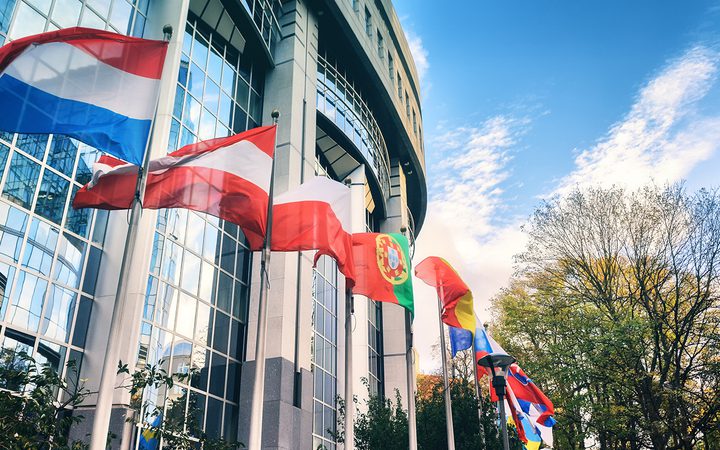
The European Patent Office (EPO) offers the chance to obtain European Patents – but why should an applicant consider this route versus the possibility of filing in each country or not filing at all? Here, we discuss the key reasons why pursuing a European patent application may be the most strategic choice for innovators.
1. Single Prosecution but Multiple Jurisdictions
Filing patent applications at the EPO can seem expensive due to the high official fees and the occasionally extended prosecution. However, it does offer the opportunity to obtain a patent in multiple jurisdictions but with a single prosecution in a single language.
A European patent application can be filed in English, French or German and prosecuted in that language, needing only further languages to be used in the grant and validation procedure. By comparison, filing separately in each European territory of interest may require individual translations for every prosecution step, adding further costs to the process.
It should be noted that the territorial coverage of the European Patent Convention (as set out here) is larger than the European Union and covers the UK and EU member states like France and Germany in addition to Switzerland and Turkey (which are not EU member states).
2. High Standard of Search
It is a testament to the quality of searches at the EPO that they are used by multiple national offices such as, for example, Italy and the Netherlands which do not have their own search teams. Even the UKIPO, which has a large search facility of its own, outsources searching to the EPO.
EPO searches are of the highest standard and are likely to find all relevant and problematic prior art at an early stage. Whilst this prior art will, of course, need to be disclosed in jurisdictions such as the US, the early discovery will mean there is time to recover from its citation rather than having to disclose cited prior art at a late stage where it could become more problematic.
3. Prolonged Pendency
It is possible to maintain the pendency of European patent applications for a considerable period of time. It is not entirely unknown to keep a European application pending for a period of 8-10 years from filing. Whilst it may often seem counterintuitive to maintain pendency, this can be a helpful tool where you have doubts about an application’s chances of proceeding to allowance.
The prolonged pendency can provide uncertainty to the applicant’s competitors, who will be kept in suspense about a problematic (to the competitor) application and the form in which a pending right might grant. This means they will need to consider design arounds even without the grant of the patent.
4. Divisional Opportunities
Provided it is based on a pending application, it is always possible to file a divisional application at the EPO, unlike some other territories. For older applications, the cost can be high due to the need to pay backdated renewal fees. However, the option to pursue the subject matter disclosed in the pending patent application will still exist, provided it is based on a pending application.
5. Direct Filing vs National Phase
Entering the European national phase from a PCT can often be very expensive due to the need to pay Examination and Designation fees (and potentially renewal fees) at the filing stage, but, as set out above, it offers the opportunity to obtain coverage in many jurisdictions using a single prosecution.
The EPO does also offer the possibility of filing at the expiry of the initial priority period (i.e. 12 months after the earliest priority date) where only a filing and search fee will be required. The remaining fees, i.e. the Examination and Designation fees, can be paid after the search report has been received and chances of grant can be more accurately determined.
If you would like to learn more about filing a European patent application at the EPO, please don’t hesitate to contact Terence Broderick.
Meet the author

About Terence Broderick
Related insights
Featured insight

Key themes from the IPO Annual Meeting 2026: AI, accountability and digital designs
- Read article
Patent Box take-up: What has changed since the beginning?
- Read article
The power of strategic partnerships in AI: Key IP considerations
- Read article
Patent Box relief passes £2 billion as take-up continues to grow
- Read article
Carry-over auxiliary requests in EPO appeals: Why early procedural planning can protect commercial value
- Read article
Filed, published & granted patents: What’s the difference?