UKIPO accepts HO LEE FOOK trade mark for registration

Holly Cameron

The UK Intellectual Property Office (UKIPO) has allowed the registration of UK Trade Mark No. UK00004106970, reversing a prior objection under Section 3(3)(a) of the Trade Marks Act 1994.
The decision offers a valuable insight into how trade mark law continues to evolve in response to changing societal norms.
Background
The application was initially rejected under Section 3(3)(a) of the Trade Marks Act 1994, which prevents the registration of trade marks that are deemed contrary to public policy or accepted principles of morality. The Examiner’s concern arose from the mark’s phonetic similarity to the phrase “HOLY F**K”.
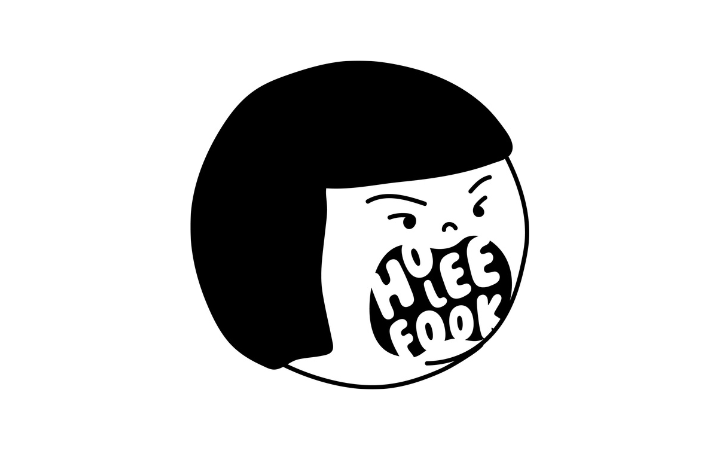
The applicant operates a street food business in Glasgow, offering a modern twist on classic Asian dishes. Since launching in 2023, the business has received considerable positive publicity, not only for its delicious food, but also for its tongue-in-cheek name, HO LEE FOOK, which also happens to have cultural significance, meaning “good fortune for your mouth” in Cantonese.
Following written submissions filed by the applicant, which were rejected by the UKIPO, Murgitroyd was appointed and attended a hearing on behalf of the Applicant.
Arguments submitted to challenge the UKIPO refusal
The current Manual of Trade Marks Practice specifically states that trade marks containing the word FOOK would be objectionable under Section 3(3)(a), following the decision in FOOK BL/0/182/05. However, this decision was handed down over 20 years ago, allowing room for the argument to be made that the decision was no longer a reflection of societal norms and tolerance towards such words.
The main submissions filed in support of the application were as follows:
- There has been a significant shift over the years in the public’s tolerance of what is and is not appropriate, and as a consequence, curse words, or phonetic equivalents, have lost their potency to offend. To support this, evidence of the positive recognition the Applicant had received towards the name on social media and online articles was submitted. The evidence overwhelmingly supported the view that the vast majority of consumers saw the mark as a humorous play on words.
- The trade mark concerned in this instance did not pertain to the use of the expletive, but to a sign which merely shares a phonetic similarity to the expletive. Analogous terms, such as “FECK”, have become commonplace and are deemed entirely acceptable within mainstream media, popularised by the likes of television programmes such as “Mrs Brown’s Boys”.
The decision in FOOK BL/0/182/05 set out that where a trade mark application is refused on the basis that it is contrary to accepted principles of public morality, only signs which would cause ‘outrage’ should be objected to, mere offence or distaste is not enough.
Public morality and trade marks: shifting societal norms
As set out above, Murgitroyd submitted at the hearing that modern-day societal norms reflect a permissive acceptance of curse words and are used in everyday conversation amongst family and friends. The Hearing Officer agreed with this view, but did point out the existence of more conservative consumers who would likely draw one of two conclusions when presented with the trade mark; the first is that they would perceive the mark as having equivalency to the expletive, rendering it wholly unacceptable; the second is that these customers would understand that the trade mark is simply a clever presentation of the words, in turning reducing the potential to offend. The evidence presented demonstrated that the vast majority of consumers fell into this second category, with many comments on social media praising the humour behind the name. Furthermore, the fact that local publications were willing to print articles about the business without any redaction of the trade mark further supported the view that consumers did not consider it offensive.
The trade mark concerned a phonetic equivalent to the expletive, in which it was argued does not lead to outrage from an overwhelming majority of the public. Evidence presented included an article published by Ofcom in September 2021 that concerned public attitudes towards offensive language on television and radio. The report categorised the word “FECK” as “mild” and “unlikely to cause concern in most circumstances”.
The Hearing Officer concluded that:
“It cannot be ruled out that there may be some individuals for whom the sign would be seen as completely unacceptable. However… the evidence suggests that such individuals exist on the more conservative fringes of the population and in my view, the majority of the UK public who occupy the middle ground in respect of moral values would not be particularly perturbed by the sign.”
The Hearing Officer subsequently overturned the original decision.
What this decision means for future trade mark applications
This matter demonstrates that an objection under Section 3(3) does not exist in a vacuum, with evolving social norms playing an important role in assessing what types of trade marks fall foul of the accepted principles of morality. Whilst it is accepted that objections under Section 3(3) turn on their facts, the decision highlights that the door is not completely closed to trade marks that tread the line between humour and offence. Evidence demonstrating the public’s tolerance and willing acceptance of such brand names is valuable, particularly evidence showing that the public falls on the side of amusement.
Moving forward, we suspect it is likely that trade mark applications of a similar nature will become more common, forcing the UKIPO to assess a potential objection under Section 3(3) through a contemporary lens.
If you have questions about trade mark registration or overcoming UKIPO objections, our experts are here to help. Get in touch with Murgitroyd today to protect your brand.
Meet the author

About Holly Cameron
Related insights
Featured insight

Three stripes, four stripes: The adidas v White Fox trade mark dispute
- Read article
Beyond the master brand: Building an IP strategy that supports brand expansion
- Read article
When is a K an N? New Balance takes on Decathlon in footwear trade mark dispute
- Read article
Jersey becomes a separate designation under the Madrid System from 1 August 2026
- Read article
Expansion plans mean little if you can’t use the brand
- Read article
Three key themes from INTA 2026: AI, economic uncertainty and a changing IP landscape