Use it or lose it: Navigating proof of use requirements post-Brexit

Christopher Banister
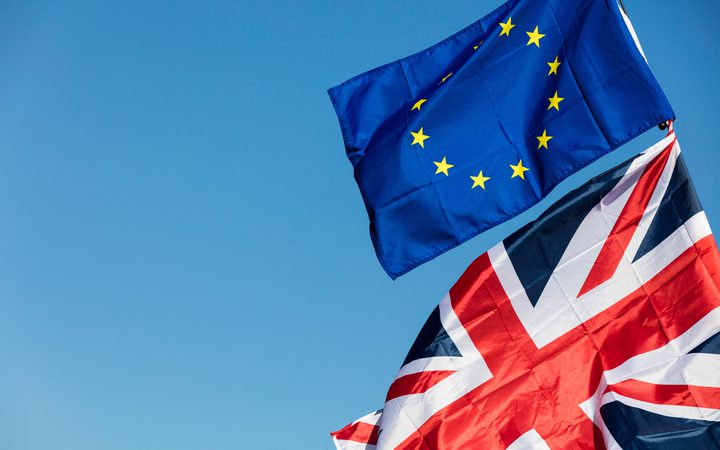
The United Kingdom's departure from the European Union triggered the creation of a large number of trade mark registrations in the UK.
Overnight on 31 December 2020, all existing EU Trade Mark Registrations were automatically "cloned" to create new, comparable UK trade mark registrations. These changes have presented businesses that trade in one or both jurisdictions with additional challenges in terms of effectively maintaining their portfolio of UK and EU trade marks.
This article seeks to explain why proof of trade mark use is so important, the impact of Brexit on proving use, and what is meant by “genuine” use in UK and EU trade mark law. This article also outlines some useful tips for trade mark owners to help them navigate proof-of-use requirements.
Trade mark proof of use – Why is it so important?
Trade mark registers are not meant to be graveyards for unused brands. Once a trade mark is registered, the owner has five years to make genuine use of the mark in relation to the registered goods and/or services.
If the owner has not used the mark during the initial five-year period, or any continuous five-year period thereafter, the owner will not only be unable to validly enforce its rights, but the registration will also be vulnerable to attack by third parties on the grounds of non-use. This "use it or lose it" principle serves two main functions:
- To Keep the Register Clear: The fundamental purpose of requiring trade marks to be used is to prevent the trade mark register from becoming cluttered with marks that are not in genuine commercial use. This ensures that new businesses are not unfairly blocked from registering new trade marks by older marks that exist only on paper. By allowing unused marks to be removed, it frees up valuable brand names for others to use and register, fostering a more dynamic and competitive marketplace.
- To Ensure only Valid Marks are Enforced: If businesses could register trade marks and enforce them without ever using them, it would lead to the "warehousing" or "stockpiling" of desirable names and symbols. This would create an unfair monopoly, allowing entities to block competitors from entering the market without contributing any commercial value themselves. The "use it or lose it" rule ensures that the trade mark register does not become a graveyard of unused marks that unjustly obstruct fair competition.
For a recent example of how failure to prove genuine use can defeat an infringement claim in practice, see our case review “Easy come, easy go: Why trade mark use matters in easyGroup v Jaybank.”
The post-Brexit shift
Before Brexit, the legal framework was simple: genuine use of an EU trade mark (EUTM) in any single member state (including the UK) was sufficient to maintain the validity of the entire EU-wide right. When the Brexit transition period ended, use of an EUTM in the UK prior to 1 January 2021 would count as genuine use of the EU-wide right. Likewise, use of a UK “clone” registration in the EU prior to 1 January 2021 counted as genuine use in the UK.
However, as it has now been five years since the end of the Brexit transition period, the situation has fundamentally changed:
- UK “Clone” Trade Marks: A UK trade mark which is a clone of an EUTM can now only be supported by genuine use within the United Kingdom. Use in Germany, France, or any other EU member state is no longer relevant for maintaining the validity of a UK mark.
- EU Trade Marks: Similarly, use in the UK no longer supports an EUTM. To defend an EUTM against a non-use cancellation action or to rely on it in an opposition, the owner must demonstrate genuine use within the European Union.
This means that a business with a strong market presence in the EU but negligible activity in the UK could see its UK “clone” registration cancelled for non-use. Likewise, a business that has only ever used its EUTM in the UK now finds that its EUTM is vulnerable to cancellation.
As the five-year post-Brexit transition period comes to an end, these issues are becoming increasingly important for trade mark owners to review. For further insight into the risks businesses face, see our article “Brexit five years on: Managing non-use risks ahead of January 2026.”
What constitutes "genuine use"?
Genuine use is a harmonised concept between the UK and EU and essentially refers to actual use of the mark. The use must be commercially genuine, outward-facing, and aimed at creating or maintaining a market share for the trade marked goods or services.
Key requirements include:
- Nature of Use: The use must be more than merely internal (e.g., only on internal company documents) or sporadic. It must be consistent with the essential function of a trade mark, which is to guarantee the identity of the origin of the goods or services to the consumer.
- Place of Use: The use must be in the relevant territory (the UK for a UK mark; the EU for an EU mark). For an EU mark, while use in a single member state can be sufficient, it must be commercially significant in the context of the EU market for those goods or services. Relying solely on minimal use in one small EU country can be risky.
- Time of Use: The use must have taken place within the relevant five-year period being assessed.
- Form of Use: The mark must be used as registered, or in a form that does not alter its distinctive character. For example, minor stylistic updates or the omission of non-distinctive elements are generally acceptable.
Evidence is key
The burden of proof for demonstrating genuine use rests on the shoulders of the trade mark owner. It is therefore very important that the owner submits strong, comprehensive and compelling evidence of use. Given the serious consequences if the evidence of use falls short of the required standard, it is highly recommended that trade mark owners seek professional guidance and advice.
Practical advice for trade mark owners
- Audit Your Portfolio: Review your UK and EU trade mark portfolios. Identify any marks registered for more than five years and assess where you have been using them.
- Segregate Your Evidence: Do not assume EU sales figures will support a UK mark, or vice versa. Begin keeping separate, clear, and dated records of use for both the UK and the EU markets.
- Ensure Dual-Market Use: If you value your rights in both the UK and the EU, you must have a commercial strategy for both. A website that ships to both territories is a good start, but you must be able to prove actual transactions and engagement with consumers in each.
- Plan for the Future: When filing new trade marks, have a realistic five-year plan for commencing genuine use in every jurisdiction where you seek protection.
The post-Brexit trade mark landscape requires a more deliberate and evidenced-based approach to portfolio management. By understanding the strict territorial nature of proof of use and proactively managing their rights, businesses can ensure their brands remain protected, enforceable, and valuable in the UK and EU.
If you would like advice on managing non-use risks and ensuring your trade mark portfolio remains enforceable, please get in touch with our team.
Meet the author

About Christopher Banister
Related insights
Featured insight

Three stripes, four stripes: The adidas v White Fox trade mark dispute
- Read article
Beyond the master brand: Building an IP strategy that supports brand expansion
- Read article
When is a K an N? New Balance takes on Decathlon in footwear trade mark dispute
- Read article
Jersey becomes a separate designation under the Madrid System from 1 August 2026
- Read article
Expansion plans mean little if you can’t use the brand
- Read article
Three key themes from INTA 2026: AI, economic uncertainty and a changing IP landscape