Brexit five years on: Managing non-use risks ahead of January 2026

Holly Cameron
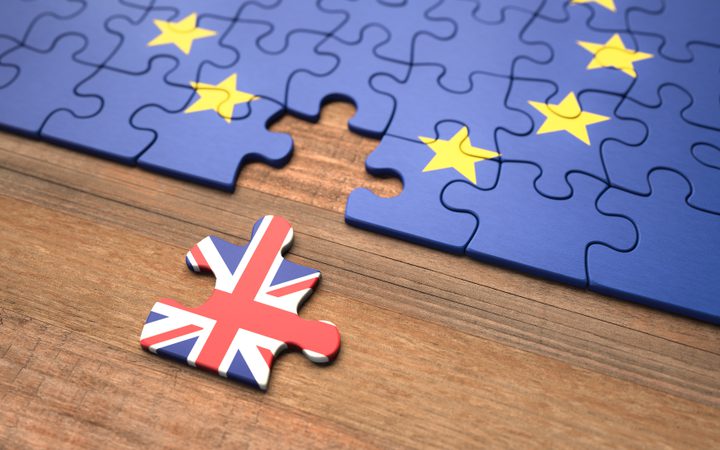
1st January 2026 marks the five-year anniversary of Brexit.
The world of trade marks was not immune to the seismic changes triggered by the UK’s withdrawal from the EU.
The impact of Brexit on UK and EU trade mark rights
Following the end of the Brexit transition period on 31 December 2020, the UK Intellectual Property Office (UKIPO) took steps to ensure that all rights holders with an existing EU trade mark registration would not lose their rights in the UK. The UKIPO created “clone” UK registrations, which are fully independent from the original EU registration and have the same legal status as if they had been applied for and registered under UK law. EU cloned registrations can be identified by the prefix UK009- before the registration number.
In both the UK and EU, once a trade mark registration is over five years old, it becomes vulnerable to cancellation on the grounds of non-use. This means that a third party can apply to cancel a registration on the basis that the owner has not put the trade mark to genuine use in the relevant territory within the five years since the date of registration, or an uninterrupted period of five years. Further, in trade mark opposition proceedings, where an opponent seeks to rely on a registration that is over five years old, they are required to first demonstrate genuine use of that registration.
Prior to Brexit, EU trade mark owners were not required to use the mark within the UK; use in some EU territories, but not all, was sufficient to demonstrate genuine use. However, following Brexit, owners of the newly created clones would need to show use in the UK, as these clones were to be treated the same as other national UK registrations. This posed an issue for businesses that were using their trade mark pre-Brexit in some EU territories, but not the UK.
The post-Brexit transitional period for trade mark use
Consequently, the UKIPO introduced a transitional framework whereby owners of UK clones could rely on use in the remaining 27 Member States of the EU for any part of the five-year period preceding 1 January 2021. These measures were reciprocated in the EU so that EU trade mark owners who had only used their mark in the UK could rely on this in EU proceedings. The primary purpose of this transitional period was to ensure that owners did not suddenly become exposed to any cancellation or opposition actions.
However, as of 1 January 2026, the use of a trade mark in the EU will no longer be relevant in UK proceedings and vice versa. This change now leaves many cloned registrations vulnerable to challenge and potentially unenforceable if they have not been used in the relevant territories since Brexit.
What steps you can take now
Review your UK and EU trade mark portfolio
Now is the time to undertake a review of your existing trade mark portfolio. It is important to take this time to assess whether your business owns any trade mark registrations that are not currently used in the relevant territory, as this may have a significant impact on the business’ enforcement strategy.
Establishing genuine use in the UK and EU
If you have a genuine intent to use the mark in either the UK or EU, but have not yet done so, you should consider planning or doing this now, rather than holding off, as establishing evidence of genuine use can take time. That said, token use of the trade mark purely for the purpose of defending cancellation proceedings will not suffice. The use of the mark should be a genuine attempt to establish a market in the UK or EU.
Consider your filing strategy
The concept of simply filing a fresh application to restart the five-year use period (known as “evergreening”) is not the correct approach and, in all likelihood, would be considered as an application filed in bad faith. That said, if the business has undergone a brand refresh and new logos or designs have been introduced, it could be an opportunity to file for these new trade marks instead.
Identify opportunities to challenge unused trade marks
On the flip side, the upcoming changes present the opportunity for brand owners to challenge any registrations owned by third parties that may have previously served as a barrier to use and registration. These unused earlier registrations may now be vulnerable to cancellation, and so it may be possible to seek to challenge these registrations in an attempt to make way for your own application.
Tailored advice for UK and EU trade mark owners
There is no universal approach on how to handle these imminent changes as the impact of Brexit on trade mark use will vary depending on each business’s portfolio, commercial activities and future plans. Therefore, should you require a review of your trade mark portfolio or guidance specific to your situation, our team of experienced trade mark attorneys would be pleased to assist and can be contacted at your convenience.
With the 1 January 2026 deadline fast approaching, early action will be critical to mitigate the risk of trade mark cancellation and to ensure continued protection across the UK and EU.
A proactive approach now can help safeguard valuable brand assets, strengthen enforcement positions, and avoid costly disputes in the future. Taking advice at this stage allows trade mark owners to make informed, strategic decisions in light of the evolving post-Brexit trade mark landscape.
Meet the author

About Holly Cameron
Related insights
Featured insight

Three stripes, four stripes: The adidas v White Fox trade mark dispute
- Read article
Beyond the master brand: Building an IP strategy that supports brand expansion
- Read article
When is a K an N? New Balance takes on Decathlon in footwear trade mark dispute
- Read article
Jersey becomes a separate designation under the Madrid System from 1 August 2026
- Read article
Expansion plans mean little if you can’t use the brand
- Read article
Three key themes from INTA 2026: AI, economic uncertainty and a changing IP landscape

Murgitroyd is a leading intellectual property firm supporting innovative businesses across a wide range of sectors. From patents and trade marks to designs, copyright, and IP strategy, their expertise extends beyond legal protection to helping organisations maximise the value of their ideas. Working across industries such as life sciences, engineering, technology, and creative sectors, Murgitroyd combines technical insight with commercial understanding to deliver tailored, forward-thinking solutions.


