Can methods for purchasing Non-Fungible Tokens (NFTs) be patented? Insights from the UKIPO’s Blackhawk decision
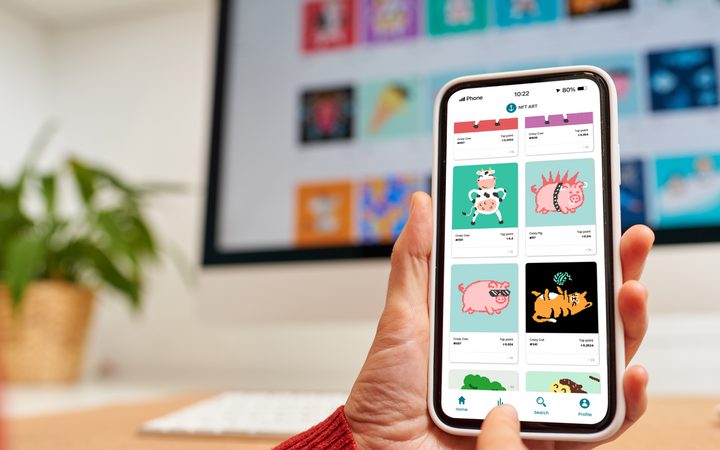
The UKIPO’s decision in O/0756/25 concerning patent application GB2301883.1, “System and Method for Using Intelligent Codes in Conjunction with Non-Fungible Tokens”, outlines how inventions based on NFTs are currently being assessed for patentability in the UK.
The decision was reached without a hearing and was based solely on correspondence on file.
The application related to a method of purchasing NFTs involving scanning a code, such as a barcode, at a Point-Of-Sale (POS).
Overview of the claims
The application included three independent claims:
Claim | Type | Key Features |
Claim 1 | Method | Method for purchasing an NFT following a user request, including validating the request and transforming purchase information into a POS-scannable barcode. |
Claim 9 | System | System claim corresponding to method claim 1, configured to implement the same steps via a computer device. |
Claim 18 | Method | Method directed to a purchase request comprising both a physical object request and an NFT request, followed by activation of a redemption code associated with the NFT. |
Assessment under Aerotel/Macrossan and Symbian
To determine whether the claimed subject matter was excluded under section 1(2) of the UK Patents Act, the hearing officer applied the four-step test from Aerotel/Macrossan:
- Properly construe the claim;
- Identify the actual contribution;
- Ask whether it falls solely within excluded subject-matter;
- If not, determine whether the contribution is technical in nature.
In Symbian, the Court made clear that the question of whether a computer-implemented invention is patentable has to be resolved by asking whether it reveals a technical contribution to the state of the art.
There did not appear to be any disagreement between the applicant and the examiner on step 1 of the Aerotel/Macrossan test, and the hearing officer accepted the examiner’s assessment of the contribution at step 2.
The applicant’s arguments focussed primarily on steps 3 and 4 of the Aerotel/Macrossan test. They did not offer a single clear statement of what the contribution was, but identified three aspects of the invention which they considered to be important:
- The step of transforming information from a purchase request into a POS-scannable code;
- A purchase request validation step; and
- The use of geographic location to filter the NFT offerings available.
However, the hearing officer found that none of these features were disclosed in a manner demonstrating a technical contribution. In particular:
- Neither the claims nor the application, as a whole, disclosed how the information from the purchase request is transformed into a scannable code;
- The application did not disclose how the validation step is carried out in technical terms and merely required that the code be determined as valid. This was considered entirely conventional and comparable to standard online transactions;
- Whilst the applicant argued that geographic filtering provided fraud mitigation, the hearing officer found that the claims merely filtered NFT availability based on location and did not demonstrate the technical contribution suggested by the applicant.
Conclusion of the decision
The hearing officer concluded that, although the applicant’s three identified features formed part of the contribution, they did not in themselves add anything to the stock of human knowledge and were merely conventional, albeit necessary, steps in the method and/or system for enabling a buyer to purchase an NFT at a POS.
The contribution was therefore found to be a particular method of conducting a financial transaction, and as such, it plainly fell within the business method exclusion.
It may well be an efficient, effective and secure way of acquiring NFTs, as the applicant submitted, but it was not considered to go beyond this, and no technical contribution was identified. The method and system made use of a computer program, but it merely served to implement the business method and was treated as a computer program “as such”.
Accordingly, the application was refused under section 18(3) of the UK Patents Act.
Implications for NFT patent drafting
The decision confirms that NFTs are not excluded per se, but claims directed to financial transaction methods, such as purchasing, validation and availability filtering, will be rejected unless they demonstrate a technical solution to a technical problem.
To improve patentability prospects, applications should:
• Identify a specific technical problem (e.g. blockchain latency, POS constraints, security mechanisms or data validation techniques);
• Explain how the solution is technically implemented;
• Show that it produces a technical effect, not merely a business outcome.
Ultimately, the patentability of NFT-related inventions will depend on the technical problem they address and whether the application demonstrates, through technical implementation, how the solution is achieved.
If you want to discuss any of these matters, do not hesitate to contact us, or Dr Romi Korotana.
Related insights
Featured insight

Key themes from the IPO Annual Meeting 2026: AI, accountability and digital designs
- Read article
Patent Box take-up: What has changed since the beginning?
- Read article
The power of strategic partnerships in AI: Key IP considerations
- Read article
Patent Box relief passes £2 billion as take-up continues to grow
- Read article
Carry-over auxiliary requests in EPO appeals: Why early procedural planning can protect commercial value
- Read article
Filed, published & granted patents: What’s the difference?

Murgitroyd is a leading intellectual property firm supporting innovative businesses across a wide range of sectors. From patents and trade marks to designs, copyright, and IP strategy, their expertise extends beyond legal protection to helping organisations maximise the value of their ideas. Working across industries such as life sciences, engineering, technology, and creative sectors, Murgitroyd combines technical insight with commercial understanding to deliver tailored, forward-thinking solutions.


