How augmented reality is enhancing automotive design, repair and the driving experience

Terence Broderick
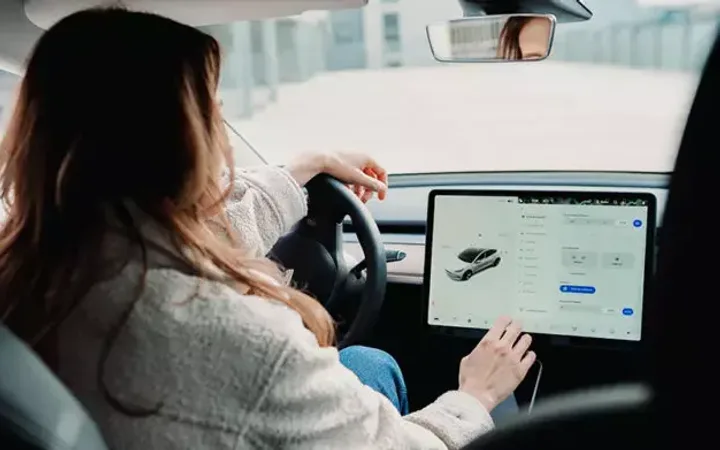
By combining reality with digital content, augmented reality (AR) technology is fast becoming a key enabler in many industries, thanks to its ability to inform and enhance our experience. In the automotive industry, there are at least three key areas where AR is already transforming our capabilities — here, we explore its impact from the garage to the driver’s seat and look at the IP considerations for developers looking to protect their AR-related innovations.
1. Vehicle design
Vehicle design and testing is being revolutionised by augmented reality. The ability to render 3D models of components and visualise them in real-world situations can be used to examine the practicality of a vehicle and its features. This means that multiple scenarios can be generated and analysed without having to build and destroy a physical vehicle or component — enabling testing to be done more quickly and effectively, which helps manufacturers reduce development time and go to market.
Various manufacturers — including Porsche and Tesla — are also using AR to help customers visualise a model before it’s ordered. The potential customer can even see how the car will look in their own garage — saving time, money and parts.
2. Vehicle repair
In the repair scene, AR is being used in garages to replace complicated manuals by providing the necessary information to maintenance technicians via tablets or headsets. This can include guided troubleshooting and can be combined with AI and machine learning. Traditional manuals often contain complex diagrams, which can be tricky to locate and apply on the correct area of a vehicle. AR helps by rendering the information technicians need in the environment around the car, helping to reduce the number of errors without constantly referring to manuals. This also benefits training, helping technicians to get to grips with vehicle components and repairs, and can be used to predict future performance and repair needs.
3. The in-vehicle experience
When AR is used in head-up displays (HUDs) on a windscreen, it can provide important information to a driver without compromising their view of the road or requiring a headset or glasses. This can include data on the surrounding environment, navigation and traffic information, as well as the status of a vehicle and its components.
The likes of Cadillac and Mercedes already use AR in their satellite navigation systems to notify drivers of precisely when to turn or change lanes by overlaying arrows on a visual feed. Such features are delivered dynamically and many navigation systems also have night mode to help drivers identify hazards in low-visibility conditions.
Perhaps the most adventurous is Nissan’s ‘Invisible to Visible’ (I2V) technology. This uses digital projections to provide a driver with a friend to virtually drive along with them. It can even make the environment outside the car look like it’s sunny, rather than a miserable cold day.
While such features are highly interesting, it’s important to note they may result in a trade-off between safety and cybersecurity.
Patenting augmented reality innovations
The possibilities of AR technology for design, safety and data are seemingly endless — and with the global AR, VR and MR market set to exceed $250bn by 2028 (an almost tenfold increase from $28bn in 2021) — it would be no surprise to see related patent applications on the rise.
If you’re looking to patent augmented reality technology, it will be useful to consider a few key questions:
Does your technology solve a technical problem?
The most important consideration is to ask whether your technology solves a technical problem. The European Patent Office (EPO) interprets ‘a technical problem’ very broadly to cover a wide range of inventions, including those in the augmented reality space.
When interpreting this requirement for AR inventions, you need to determine whether your invention is characterised by the aesthetic presentation of the information you are delivering into the AR environment — or whether the information is characterised by some technical requirement.
If it is the latter, you are likely to satisfy this patentability requirement — with the former, you could have a tough time.
How broad is your technology?
Are you only addressing a problem in the automotive space, or could your invention be used in another sector (such as heath or education)? Alternatively — and perhaps more ambitiously — are you addressing a key problem for AR more generally?
A broader invention can be more difficult to patent, however — even though your focus may be on the automotive space — an invention with broader application may provide potential for monetisation from other sectors.
Where is the value in your technology?
Is your invention a piece of apparatus or based in the underlying software that delivers the information being rendered in an AR environment?
When applying for a patent, it’s important to be clear about this to ensure that your invention can be defined in a way which is commercially useful.
Talk to us
Our dedicated automotive and software teams work closely together to support businesses that innovate in areas like augmented reality. To find out more about how we can add value to your IP journey, get in touch for a free initial chat about your technology.
Meet the author

About Terence Broderick
Related insights
Featured insight

Key themes from the IPO Annual Meeting 2026: AI, accountability and digital designs
- Read article
Patent Box take-up: What has changed since the beginning?
- Read article
The power of strategic partnerships in AI: Key IP considerations
- Read article
Patent Box relief passes £2 billion as take-up continues to grow
- Read article
Carry-over auxiliary requests in EPO appeals: Why early procedural planning can protect commercial value
- Read article
Filed, published & granted patents: What’s the difference?

Murgitroyd is a leading intellectual property firm supporting innovative businesses across a wide range of sectors. From patents and trade marks to designs, copyright, and IP strategy, their expertise extends beyond legal protection to helping organisations maximise the value of their ideas. Working across industries such as life sciences, engineering, technology, and creative sectors, Murgitroyd combines technical insight with commercial understanding to deliver tailored, forward-thinking solutions.


