How to patent an infotainment system

Terence Broderick
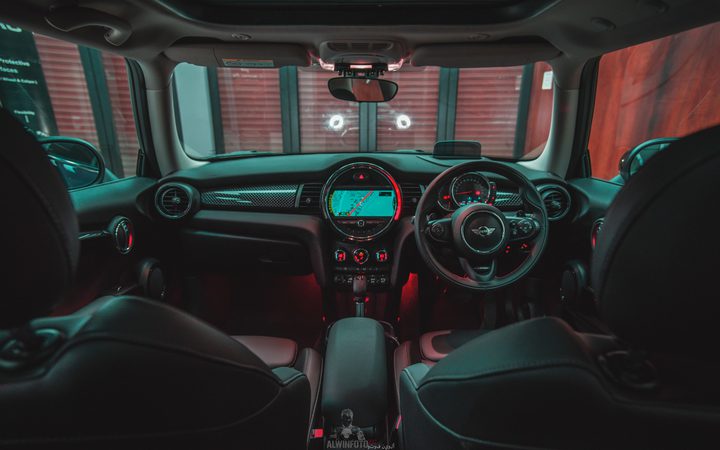
Infotainment systems in our vehicles are fast evolving.
Just a decade ago, a CD player and an input port for an MP3 player were about the most you could expect from a standard family car — but we’ve since witnessed enormous changes to the interior of cars and what’s capable of being delivered to the driver and passengers while they’re travelling. The widespread proliferation of integrated satellite navigation systems and the growing sensor networks that are built into cars mean that a large amount of data is now at the driver’s fingertips.
Car manufacturers are seeking technology support
This growth in data being delivered to the interior of vehicles shows no sign of abating. There’s a growing view that vehicles are merely becoming an extension of our homes and offices — meaning there’s a demand for large amounts of content to be successfully delivered without compromising on other aspects of a vehicle’s functionality.
The recent tie-up between Jaguar Land Rover and Blackberry is an indication of the growing desire among vehicle manufacturers for interiors to become as much about the user interface and entertainment as they are about driving.
Additionally, BMW signing up to a licensing arrangement with Avanci is an indication of its recognition that vehicles will become nodes in a growing telecommunications network, especially as autonomous vehicles develop. It’s anticipated that vehicles will not be merely passive nodes that simply receive data and present it to the driver, but active nodes, which generate much of their own data and transmit that onto the network.
The development of systems which employ so-called swarm intelligence will mean that vehicles are transmitting their location and information about their location, as well as messaging from the dashboard, to a wider communications network.
Safety first — patenting infotainment systems
One of the challenges with infotainment systems inside vehicles is that, for the time being at least, the vehicle is under the control of the driver — and infotainment systems must be usable by the driver while they’re driving.
This presents a problem. Not only must the interface exist for the driver to both access and transmit information, the driver must be able to do so in a way which does not compromise safety. That is to say, infotainment systems within vehicles are as much about the user interface as the content and functionality they present.
User interfaces have a love-hate relationship with the patent system. Anyone who has followed the smartphone patent battles closely will remember the patentability concerns around the slide-to-unlock feature on the Apple iPhone. These arguments, for and against, will likely be closely analysed again by patent offices around the world, as protection is pursued for the interfaces that connect those within a vehicle to the outside world.
How to patent a user interface
When user interfaces are discussed in terms of the patent system, they’re often tied to the way in which they present information, which is where the source of difficulty lies.
Generally speaking, for an invention to meet patentability requirements, it must produce a technical effect which serves a technical purpose. A user interface is no different. The European Patent Office has commented on this scenario extensively in its case law in recent years.
Based on a review of these recent cases, it seems that a user interface can satisfy the requirements of patentability if it meets one or more of these requirements:
- The user interface credibly assists a user in performing a technical task by means of a continued and/or guided human-machine interaction process (i.e. the assistance to the user is objectively, reliably and causally linked to the respective interface).
- The user interface enables the user to properly operate a technical system (i.e. a car).
- The user interface produces an effect which isn’t dependent on the psychology of the user, but rather on precisely definable factors.
- The user interface presents information which leads to a physiological reaction.
Therefore, patent protection should be considered for infotainment systems which address these problems inside a vehicle.
Patents at the ready
The development of vehicle infotainment systems is anticipated to generate a lot of patenting activity over the next couple of years. Innovators in this area should avail themselves of the opportunity to protect inventions which have a chance of obtaining full patent protection.
We have specialists with expertise in protecting user interfaces, software and inventions in the automotive sector. We can help you to obtain patent protection for infotainment systems which seek to provide information to drivers while maintaining safety.
For more information, feel free to get in touch with us.
Meet the author

About Terence Broderick
Related insights
Featured insight

Filed, published & granted patents: What’s the difference?
- Read article
What are trade secrets & how can they be protected?
- Read article
Right-sizing your patent portfolio: Maximising value through strategic portfolio management
- Read article
Why intellectual property matters to investors: IP due diligence and investment readiness
- Read article
EPO guidelines for examination: 2026 amendments & updates
- Read article
Battery recycling and reuse technologies drive patent growth

Murgitroyd is a leading intellectual property firm supporting innovative businesses across a wide range of sectors. From patents and trade marks to designs, copyright, and IP strategy, their expertise extends beyond legal protection to helping organisations maximise the value of their ideas. Working across industries such as life sciences, engineering, technology, and creative sectors, Murgitroyd combines technical insight with commercial understanding to deliver tailored, forward-thinking solutions.


