Supreme Court clarifies post-sale confusion in trade mark disputes: what Iconix v Dream Pairs means for brand owners

Gareth Price

The recently issued decision of the Supreme Court in Iconix Luxembourg Holdings SARL v Dream Pairs Europe Inc is big news in the world of trade marks and brand protection.
In this article, we discuss the background to the matter, the decision of the Supreme Court, and why it matters to brand owners.
Background to the Iconix v Dream Pairs trade mark dispute
Around 2018, Dream Pairs began selling in the UK, via Amazon and eBay, a variety of footwear branded with the following logo:

The logo was used on trainers and football boots as follows:
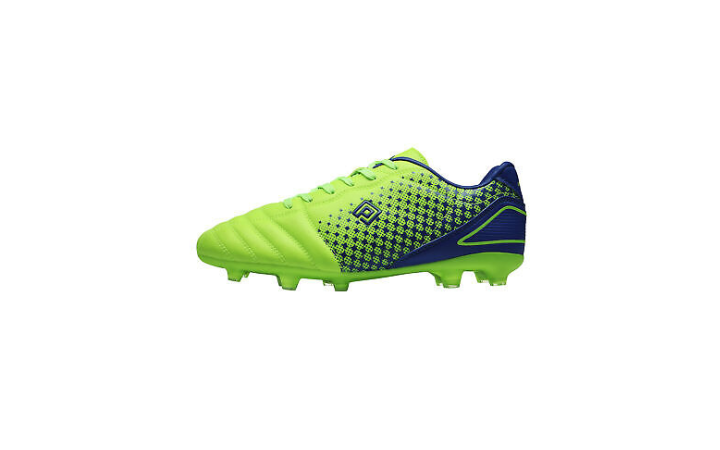
Iconix, the owner of the Umbro sports brand, took offence and issued proceedings against Dream Pairs for trade mark infringement, alleging that the DP Sign infringed the registered trade marks for the following logos:

The High Court dismissed Iconix’s claim. It found that there was “a very low degree of similarity” between the Umbro Logo and the DP Sign and no likelihood of confusion, even when post-sale use of the products bearing the DP Sign was taken into consideration.
In many cases, that would be the end of the matter, but Iconix obtained leave to appeal the decision to the Court of Appeal, who, no doubt to the delight of Iconix, overturned the decision of the trial judge and found infringement.
The Court of Appeal held that the judge’s conclusion that there was a very low degree of similarity was irrational when the DP Sign was viewed from any angle other than square-on. The Court of Appeal assessed similarity and confusion for itself. It concluded that there was “a moderately high level of similarity” between the Umbro Logo and the DP Sign in the post-sale context, particularly when the DP Sign was viewed on a football boot by a viewer standing nearby and looking down at it. It also concluded that there was a likelihood of confusion on the part of a significant proportion of consumers.
The Supreme Court decision
As a rule, obtaining permission to appeal a case to the Supreme Court requires the court to believe that the case is one that has significant legal or public implications. The fact Dream Pairs was given permission to appeal indicated that this was a case of significant importance for brand owners at large.
In short, the Supreme Court unanimously allowed the appeal, but not because of the arguments presented by Dream Pairs on the questions of similarity and confusion. Instead, the appeal succeeded because the Court of Appeal had overreached its powers in overturning the factual findings made by the trial judge.
The Supreme Court found that the trial judge’s decision was not irrational. The judge had considered the effect of viewing the DP Sign from different angles and the post-sale context but did not regard those considerations as detracting from his conclusion about the low level of similarity or lack of a likelihood of confusion.
This decision is a strong reminder that the question of trade mark infringement is a subjective one. Whilst a trial judge may reach a different decision from a judge in the Court of Appeal, this does not justify the appeal court substituting their own, different views, of the answer facing the judge unless the original decision was irrational or founded in error of principle or of law.
Post-sale use and visual angles: rethinking trade mark similarity
The Supreme Court found that when assessing the similarity of trade marks (and if similar, the degree of similarity), realistic and representative post-sale circumstances can be considered. This means that similarity is not to be assessed based only on a side-by-side comparison, but also on how the marks are perceived when they are being used.
This will mean that different viewing angles or representations may be relevant to the question of similarity, if they are realistic and representative of how a sign is perceived in normal use. In the case of footwear, as in this case, it would be reasonable to consider how the sign appears when viewed from above by the wearer.
The Supreme Court emphasised that if marks are not similar when compared in realistic and representative post-sale circumstances, this does not negate the side-by-side comparison. If there is a finding of similarity in either the side-by-side comparison or the realistic and representative post-sale circumstances, this should be sufficient for the court or tribunal to go on to consider the question of confusion.
What counts as consumer confusion in trade mark law?
The Supreme Court confirmed that post-sale confusion is sufficient for there to be a finding of a likelihood of confusion, even if there was no confusion at the point of sale. The existence of the likelihood of confusion is the damage to the trade mark owner.
It rejected the arguments made by Dream Pairs that for there to be an actionable infringement, there must be post-sale confusion that i) jeopardises the essential function of a trade mark (as a guarantee of origin) at the point of a subsequent sale or in a subsequent transactional context; and ii) results in damage at the point of sale or in a transactional context in the sense of influencing consumers when they make a choice about the goods or services in question.
Implications for brand strategy and trade mark enforcement
The decision of the Supreme Court has been welcomed by brand owners and those involved in brand protection and enforcement. The confirmation that post-sale context has a bearing on the question of similarity and likelihood of confusion is a welcome acknowledgement that questions of trade mark infringement need to be viewed through a real-world lens. It is not simply a question of conducting a side-by-side comparison of trade marks to determine whether they are similar.
In practice, this will mean:
- When designing and clearing brands, particularly logos, for use, it will be necessary to evaluate how the mark appears in use on products. This is likely to be particularly relevant in the fashion, merchandise and wearable sectors. This analysis should extend to how products are presented in and out of packaging, as well as in-store.
- Brand owners should also consider how a potentially infringing product is offered for sale and whether the appearance of the brand will be different when a product is packaged for delivery or displayed in-store. This is likely to lead to greater use of real-world evidence in infringement claims.
- Brand owners may have greater success bringing likelihood of confusion claims against producers of lookalikes or dupes. These cases have always been difficult, as consumers know where they shop and what brands are available in those stores. However, if post-sale context is to be considered, account can be taken of how a product appears once its packaging has been removed, and away from the sanctuary of the store from which the product was purchased.
- New and innovative arguments based on post-sale context can be devised and run in current and future proceedings before the courts and the UKIPO.
Real-world context now central to UK trade mark law
The decision in Iconix Luxembourg Holdings SARL v Dream Pairs Europe Inc fortifies that in the UK, real-world factors, such as how a brand appears on an item of clothing, are now very much part of claims for trade mark infringement based on a likelihood of confusion. The questions of similarity and confusion are dynamic and relate to how brands are perceived by consumers in daily life.
Are you assessing the risks of lookalikes, or reviewing your clearance and enforcement strategy?
Our experts at Murgitroyd regularly provide strategic, commercially focused IP advice to companies, from SMEs to large corporate clients.
Contact us today to explore what this Supreme Court decision means for your brand protection strategy.
Meet the author

About Gareth Price
Related insights
Featured insight

Three stripes, four stripes: The adidas v White Fox trade mark dispute
- Read article
Beyond the master brand: Building an IP strategy that supports brand expansion
- Read article
When is a K an N? New Balance takes on Decathlon in footwear trade mark dispute
- Read article
Jersey becomes a separate designation under the Madrid System from 1 August 2026
- Read article
Expansion plans mean little if you can’t use the brand
- Read article
Three key themes from INTA 2026: AI, economic uncertainty and a changing IP landscape

Murgitroyd is a leading intellectual property firm supporting innovative businesses across a wide range of sectors. From patents and trade marks to designs, copyright, and IP strategy, their expertise extends beyond legal protection to helping organisations maximise the value of their ideas. Working across industries such as life sciences, engineering, technology, and creative sectors, Murgitroyd combines technical insight with commercial understanding to deliver tailored, forward-thinking solutions.


